Call us directly at +2347088649545

Role of Artificial Intelligence in International Education
Table of Contents
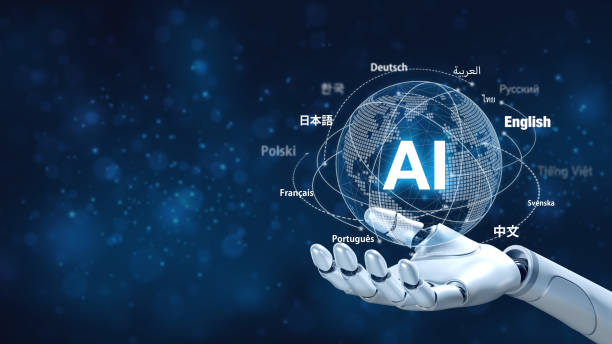
Artificial intelligence revolutionizes international education by personalizing learning paths, expanding global access, and streamlining administrative tasks for educators worldwide. UNESCO highlights AI’s capacity to tackle Sustainable Development Goal 4 challenges through innovative tools while prioritizing equity and human-centered approaches. For Nigerian students and professionals eyeing study abroad opportunities, understanding AI’s role equips them to thrive in competitive global landscapes.
The 2025 International Day of Education, dedicated to AI by UNESCO, spotlights its transformative power in preserving human agency amid rapid tech adoption. In high-income nations, over two-thirds of secondary students already use generative AI for schoolwork, while teachers leverage it for lesson planning and assessments. Artificial Intelligence in international education refers to adaptive platforms, virtual tutors, and analytics that bridge geographical and resource gaps, fostering inclusive learning across borders. This post explores AI’s benefits, applications, challenges, and future implications, drawing from UNESCO guidelines and recent studies to guide Nigerian audiences toward empowered global education journeys.
Key Benefits of Artificial Intelligence in Global Classrooms
Artificial Intelligence personalizes learning by analyzing student strengths, weaknesses, and paces to deliver tailored curricula, boosting engagement and outcomes in diverse international settings. Tools provide automated feedback on assignments, enabling immediate corrections and freeing teachers for mentoring, which enhances academic standards through consistent grading and resource access. Accessibility surges with real-time translation, text-to-speech, and adaptive content for neurodiverse learners or those in remote areas, making quality education viable even on low-bandwidth devices.
In multilingual programs, Artificial Intelligence supports cross-cultural exchanges by generating subtitles and customizing lessons, vital for students from regions like Nigeria pursuing overseas studies. Predictive analytics identify at-risk learners early, improving retention in global universities. Overall, these features raise motivation, attendance, and performance, as evidenced by pilot studies showing faster mastery when AI complements human instruction.
Practical Applications Across Borders
Virtual tutors and adaptive platforms enable anytime access to international curricula, supporting student mobility without physical relocation. Institutions use Artificial Intelligence for predictive admissions, matching applicants to programs based on data-driven insights, streamlining processes for applicants worldwide. In teacher training, AI simulates scenarios to build competencies, preparing educators for diverse classrooms in programs like Erasmus+ or Fulbright exchanges.
Competency frameworks from UNESCO promote AI literacy, equipping students with skills for future jobs in AI-driven fields. For international schools, AI facilitates collaborative virtual environments, fostering knowledge sharing across continents. These applications particularly benefit developing nations by overcoming infrastructure barriers through offline modes and scalable cloud tools.

Empower your future. Start your journey to studying abroad today!
Reach out to Tizee Consult for enquiries and consultations. Click the button below;
Challenges and Ethical Hurdles
Despite promise, AI risks deepening inequalities without safeguards, as low-resource regions like parts of Africa lack devices or digital literacy. Data privacy concerns arise from vast student data collection, necessitating strict age limits (e.g., 13+) and transparent algorithms to build trust. Bias in Artificial Intelligence systems can perpetuate disparities if training data overlooks diverse cultures, undermining equity in international assessments.
Educators face over-reliance fears, where automation sidelines critical thinking and human interaction essential for holistic development. Policy gaps lag behind tech speed, with countries split on permissions versus restrictions. Addressing these demands robust governance, including UNESCO’s human-centered principles for inclusive deployment.
Future Outlook for Nigeria and Global Learners
By 2027, the AI education market could hit $20 billion, generating jobs in AI, fintech, and data fields; opportunities Nigerian youth can seize through international training. In Nigeria, AI empowers women in global careers via skill-building platforms, aligning with local initiatives for equitable access. Future trends include hybrid models blending AI efficiency with teacher expertise, ensuring ethical scaling worldwide.
Policymakers must prioritize professional development and infrastructure to maximize gains. For Nigerian families, AI democratizes elite education, preparing the next generation for a tech-integrated world.
Partner with Tizee Consult, your trusted educational and travel consultant, to navigate AI-powered international pathways. Book a free consultation now and unlock personalized strategies for studying abroad.